I started with a base of wind and general atmosphere. To make this I selected the best sections of my field recordings and placed them directly after each other in the Ableton timeline window. As they are individual sections of chopped up audio, their beginnings and endings are very abrupt, often making a clicking or popping sound. To remove these, and make the wind/atmosphere layer sound like one whole recording, I utilised cross fades between the individual sections. The crossfade gradually fades the one section of audio out with simultaneously fading the other in, making the two sections sound as if they’re the same recording. To add some verity, I also reversed some of the clips, something that surprisingly did not sound out of place and fit in well with the rest of the original atmosphere recordings.
My plan was to have the sound of the wind drop down when the text comes in, allowing the text to become the focus of the piece. However, doing this with just one base layer made the piece very quiet and sound incredibly thin when the volume was lowered. To avoid this, I layered 3 wind tracks to add more texture. I used EQ to create a low, mids and high wind track. This allowed me to drop the volume of the low wind track on its own, this still made enough space for the text without making the piece sound thin.
I felt I needed some more accurate recordings to really convey a sense of place. While I was able to get some recordings of birds, they weren’t very loud or isolated. To work around this, I used samples from the BBC’s free sound recordings library. As the text was describing four species of birds, I found some recordings of specifically those birds. I arranged the piece so that the text describing each bird came in during the middle of the sampled bird song.
I still felt that the piece was a little too barren. After reflecting again on my visit, I remembered how two other prominent sounds in the nature reserve was water flowing from a small stream into a pond, and the occasional sound of plants rustling in the wind. To convey this I added a BBC recording of water flowing alongside the wind tracks. I also used a few of my own recordings of plants rustling in parts where I felt the piece was particularly empty.
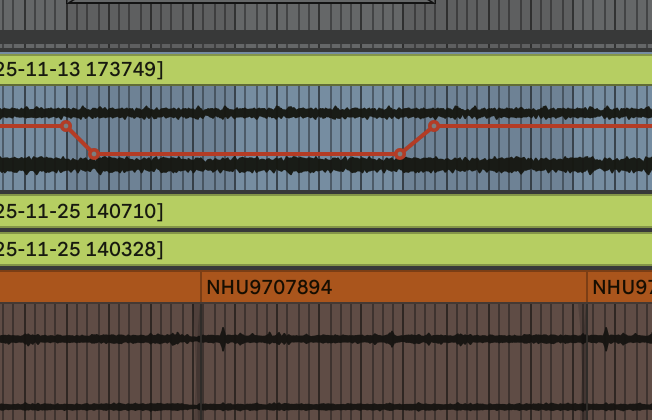
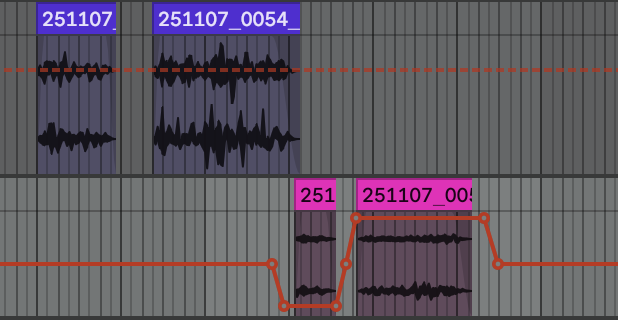
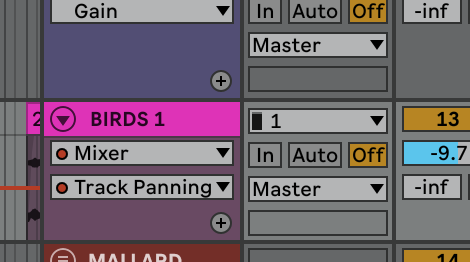
Mixing the piece was mostly a case of balancing out all the audio so nothing sounded out of place. I only used EQ to reduce harsh sounds, for example one of the bird songs was quite piercing. Some light compression was used on the text, this was to help bring the volume up.I used automation to pan small elements to the left or right, and to bring the low wind channel down.